Cold Hands & Poor Circulation Relief in Delray Beach
Medically reviewed by Dr. Tony Willcox, PhD, D.A.O.M., A.P.
Last reviewed: September 2026



Medically reviewed by Dr. Tony Willcox, PhD, D.A.O.M., A.P.
Last reviewed: September 2026
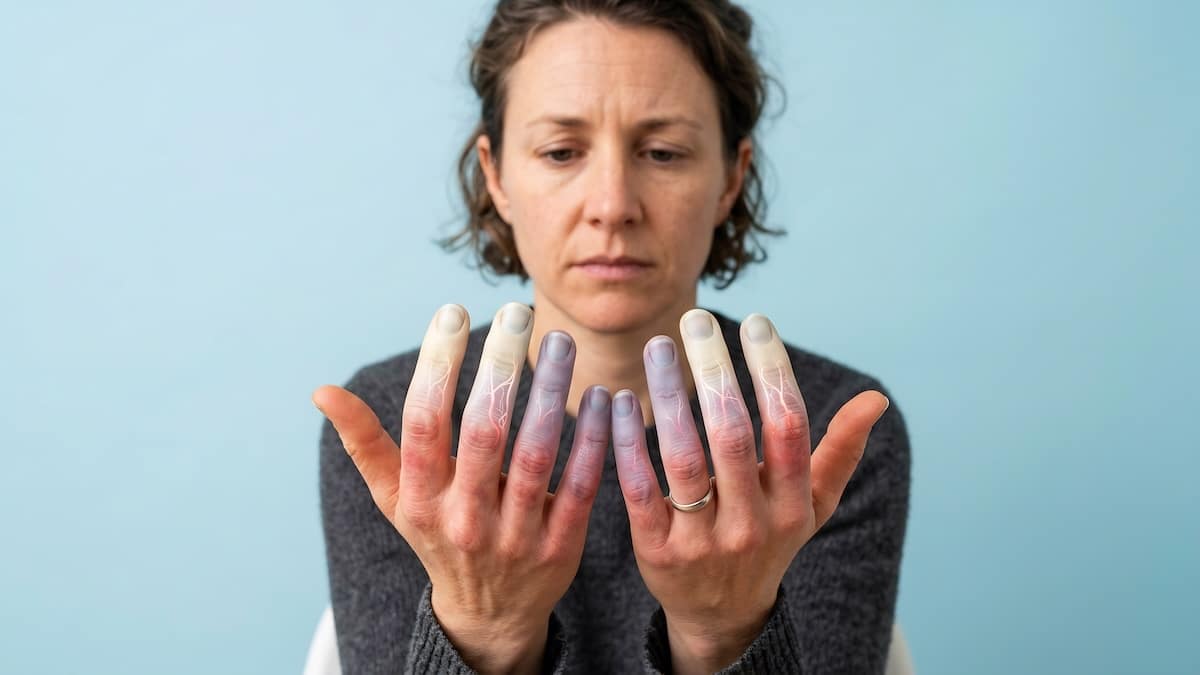
Raynaud’s syndrome — also called Raynaud’s phenomenon — is an exaggerated narrowing of the small blood vessels in the fingers and toes in response to cold or stress. This vasospasm temporarily cuts blood flow, causing the classic color changes and discomfort. It comes in two forms: primary Raynaud’s, which occurs on its own and is usually mild, and secondary Raynaud’s, which is linked to an underlying condition such as an autoimmune disease and can be more serious. Telling the two apart is a job for a physician, and an important one.
Raynaud’s attacks tend to follow a recognizable pattern:
Primary Raynaud’s has no clear underlying cause and tends to be milder. Secondary Raynaud’s is associated with conditions such as scleroderma, lupus, and other autoimmune diseases, so a medical evaluation is considered important — both to identify the form present and to rule out or manage any underlying condition before acupuncture is added as support.
In Chinese medicine, the cold, pale extremities of Raynaud’s fit naturally with patterns of Yang deficiency and Cold obstructing the channels, where warmth and Qi and Blood no longer reach the fingers and toes. Stress-related Liver-Qi stagnation is often layered in, since emotional stress is such a common trigger. Treatment aims to warm the channels, move Qi and Blood to the extremities, and calm the stress response that triggers attacks — often using warming techniques alongside needling.
Acupuncture is used for Raynaud’s to support circulation to the hands and feet and to calm the stress response that so often triggers attacks. Warming techniques such as moxibustion are frequently paired with needling, and because stress is a key trigger, this care overlaps with the calming effects that draw many patients to acupuncture for stress.
A 2023 systematic review and meta-analysis — the first of its kind — found that acupuncture was associated with increased remission and fewer daily attacks in people with Raynaud’s syndrome (Zhou et al., Acupuncture in Medicine, 2023). Importantly, the authors stressed that these findings come from small studies with very low-quality evidence and should be interpreted with caution until larger trials are done. So acupuncture is offered as a gentle, complementary option here — promising but not proven — alongside a patient’s medical care.
A first visit begins with a conversation about the attacks — how often they happen, what triggers them, how severe they get — and whether a patient has been evaluated for primary versus secondary Raynaud’s. Dr. Willcox will select a point protocol aimed at warming and supporting circulation, often incorporating gentle heat, and will address stress as a trigger. Because Raynaud’s is chronic and driven by cold and stress, treatment is usually planned as a series and paired with practical warmth and trigger-management strategies.