


Acupuncture and Osteoarthritis
OBJECTIVE:
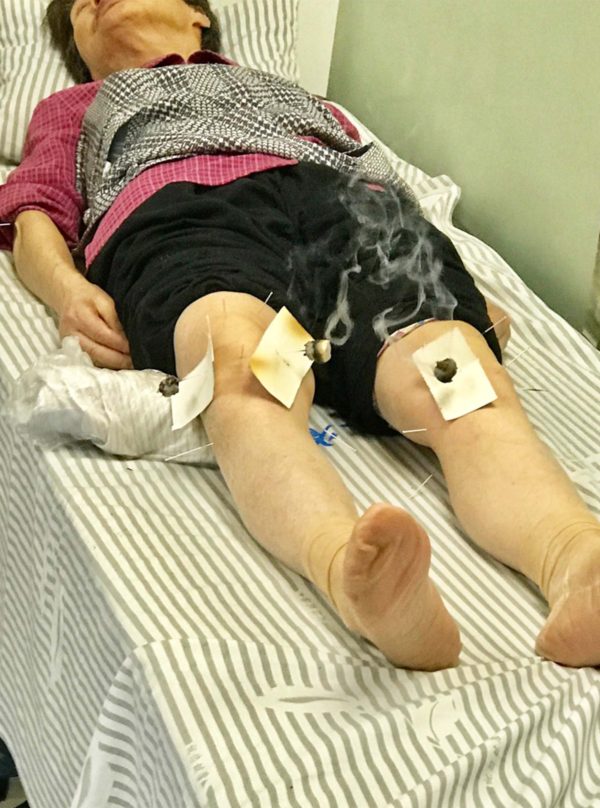
A patient receiving Acupuncture treatment for osteoarthritis
DESIGN:
A randomized, controlled trial.
SETTING:
Two outpatient clinics (an integrative medicine facility and a rheumatology facility) located in academic teaching hospitals and 1 clinical trial facility.
PATIENTS:
570 patients with osteoarthritis of the knee (mean age [+/-SD], 65.5 +/- 8.4 years).
INTERVENTION:
23 true acupuncture sessions over 26 weeks. Controls received 6 two-hour sessions over 12 weeks or 23 sham acupuncture sessions over 26 weeks.
MEASUREMENTS:
Acupuncture and osteoarthritis – The primary outcomes were changes in the Western Ontario and McMaster Universities Osteoarthritis Index (WOMAC) pain and function scores at 8 and 26 weeks. Secondary outcomes were patient global assessment, 6-minute walk distance, and physical health scores of the 36-Item Short-Form Health Survey (SF-36).
RESULTS:
Participants in the true acupuncture group experienced greater improvement in WOMAC function scores than the sham acupuncture group at 8 weeks (mean difference, -2.9 [95% CI, -5.0 to -0.8]; P = 0.01) but not in WOMAC pain score (mean difference, -0.5 [CI, -1.2 to 0.2]; P = 0.18) or the patient global assessment (mean difference, 0.16 [CI, -0.02 to 0.34]; P > 0.2).
Moreover, WOMAC pain score improved more (mean difference, -0.87 [CI, -1.58 to -0.16]; P = 0.003). Additionally, patient global assessment showed greater improvement (mean difference, 0.26 [CI, 0.07 to 0.45]; P = 0.02).
LIMITATIONS:
At 26 weeks, 43% of the participants in the education group and 25% in each of the true and sham acupuncture groups were not available for analysis.
CONCLUSIONS:
Acupuncture seems to provide improvement in function and pain relief as adjunctive therapy for osteoarthritis of the knee when compared with credible sham acupuncture and education control groups.
Click Here To View More Articles | Research | Resources
Resources
