


Endometriosis

Complementary Pelvic Pain and Quality-of-Life Support for Endometriosis in Delray Beach

Medically reviewed by Dr. Tony Willcox, PhD, D.A.O.M., A.P.
Last reviewed: September 2026

Endometriosis affects an estimated one in ten women of reproductive age — yet it is often lived with for years before it is ever named, its pain quietly written off as “just bad periods.” At Acupuncture Zen in Delray Beach, endometriosis is met differently: as a chronic, inflammatory condition whose pelvic pain, menstrual cramping, and daily disruption deserve real, ongoing support. Dr. Tony Willcox, A.P., offers acupuncture as a gentle, drug-free complement to a patient’s gynecologic care — a way to help ease pain and support quality of life while a woman and her physician manage the condition itself. Endometriosis is one of several reproductive conditions the clinic treats.
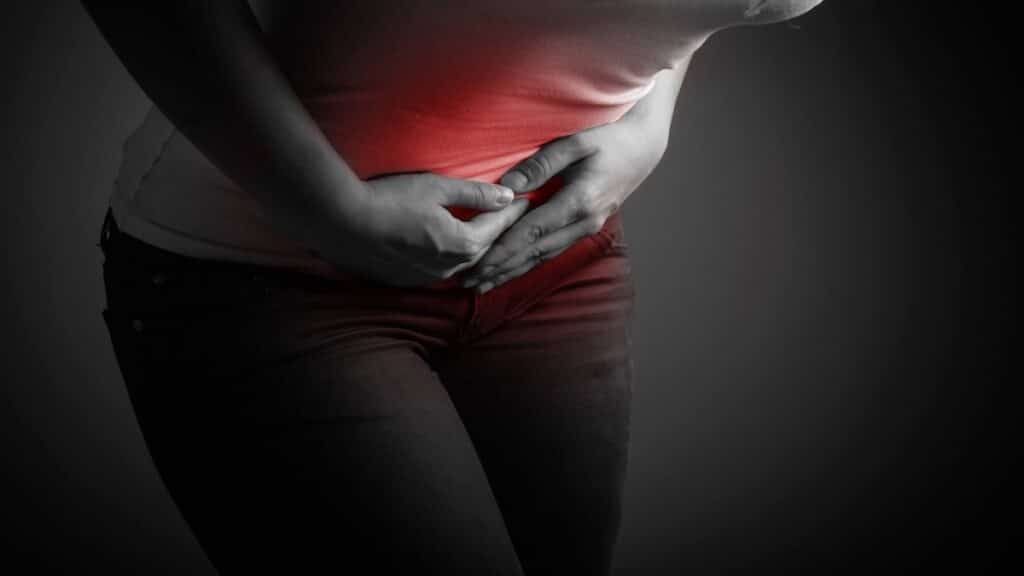
Woman holding her lower abdomen with pelvic pain highlighted in red, a common sign of endometriosis.

What Is Endometriosis?

Endometriosis is a long-term condition in which tissue similar to the lining of the uterus grows outside the uterus — most often on the ovaries, the fallopian tubes, and the tissues lining the pelvis. With each menstrual cycle, that misplaced tissue responds to the same hormonal signals as the uterine lining, thickening and bleeding with nowhere to go. Over time, this is understood to drive chronic inflammation, scarring, and adhesions that can bind pelvic organs together. The result is a condition defined not by a single cause but by an ongoing inflammatory process — one that can range from mild to severely disruptive, and that no two women experience in quite the same way.

Common Symptoms & Causes

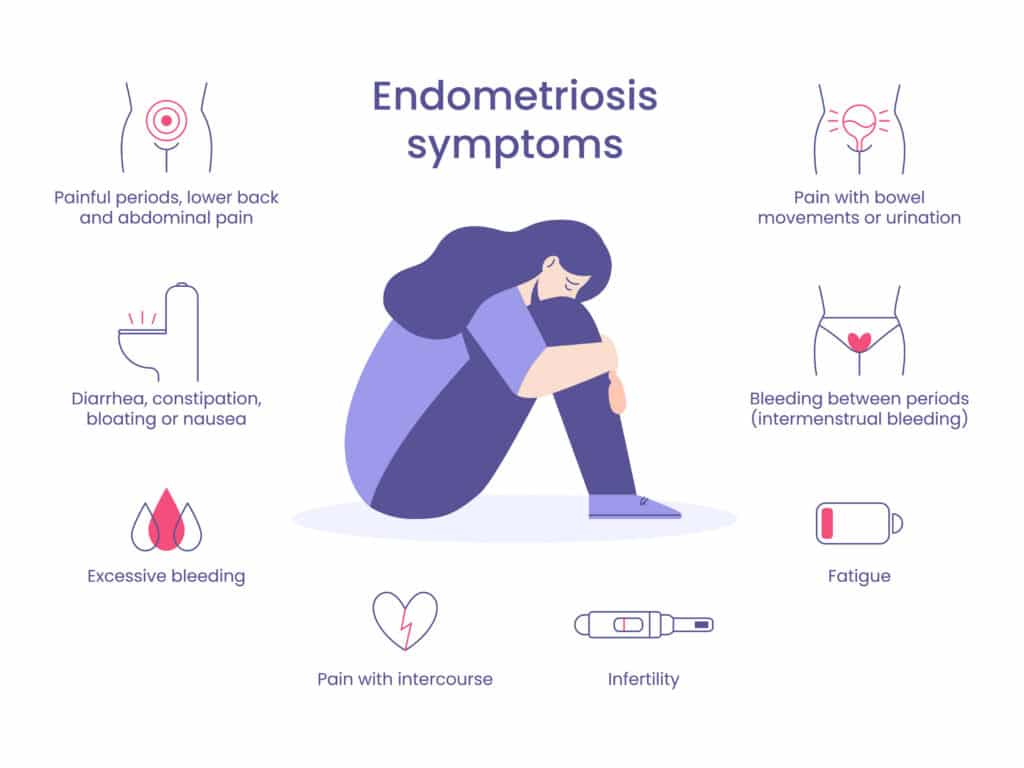
Infographic of common endometriosis symptoms including painful periods, pelvic and lower-back pain, bloating, fatigue, and pain with intercourse.

The hallmark of endometriosis is pain — but it rarely arrives alone. Common symptoms include:

  • Deep or cramping pelvic pain, often worse around menstruation
  • Painful periods (dysmenorrhea) that may intensify over time
  • Pain during or after intercourse
  • Pain with bowel movements or urination, particularly during menses
  • Heavy or irregular menstrual bleeding
  • Persistent fatigue
  • In some cases, difficulty conceiving

The precise cause is not fully understood. Leading explanations include retrograde menstruation—menstrual tissue flowing backward through the fallopian tubes—alongside immune, hormonal, and genetic factors that influence how endometrial-like tissue takes hold and grows. What is clear is that endometriosis is a whole-body inflammatory condition, not simply a uterine one.

The Chinese Medicine Perspective

Traditional Chinese medicine recognized the pattern behind endometriosis long before the modern name existed. Its fixed, stabbing, cyclical pain is understood as a classic sign of blood stasis — blood that no longer moves freely through the channels of the lower abdomen and instead gathers, stagnates, and obstructs. This stasis is often compounded by stagnant qi, by cold that contracts and slows circulation, or by an underlying deficiency that leaves the body unable to keep blood moving. Acupuncture care therefore centers on a simple aim: move qi and blood, warm the lower abdomen, and restore free, unobstructed flow through the pelvis.

How Acupuncture May Help

Research on acupuncture for endometriosis is still developing, but its direction is consistent and encouraging. A 2025 systematic review and meta-analysis of nine randomized controlled trials, involving 535 patients, found that acupuncture used on its own significantly reduced pain intensity and improved patients’ clinical response Yang et al., Medicine, 2025. A separate 2024 systematic review in the mainstream journal Archives of Gynecology and Obstetrics reached a similar conclusion, reporting meaningful reductions in endometriosis-related pain along with improved quality of life. Both reviews note that the current evidence is limited by the size and quality of the underlying trials — acupuncture is understood to support symptoms and comfort, not to remove endometrial tissue or replace medical treatment.

In practice, treatment at Acupuncture Zen centers on gentle needling across the lower abdomen and lower legs, timed where possible to the phases of the menstrual cycle, and may be paired with electro-acupuncture or gentle warming to encourage circulation where pain concentrates. For some patients, Dr. Tony may also draw on Chinese herbal medicine to support the overall approach. The goal throughout is comfort and steadier day-to-day function — this is care focused on pelvic pain and quality of life, not a fertility treatment. To learn more about the foundational modality, visit the acupuncture page.

What to Expect at Your Visit

A first visit begins with a thorough conversation — not only about pain, but about the menstrual cycle, its timing, and how symptoms rise and fall across the month. From there, Dr. Tony develops an individualized plan. Treatment itself is quiet and relaxing: fine, sterile needles are placed at points across the lower abdomen and legs and left in place for roughly 25 to 30 minutes while the body settles. Because endometriosis is cyclical, care is typically delivered as a course of sessions across several menstrual cycles rather than as a single appointment — giving the body time to respond and allowing the plan to be adjusted as symptoms change.

Frequently asked questions

No. Endometriosis is a chronic medical condition, and acupuncture is not a cure. What research suggests is that acupuncture may help ease the pelvic pain and menstrual cramping associated with it and support quality of life — as a complement to, never a replacement for, care from a gynecologist.

Because endometriosis symptoms follow the menstrual cycle, care is usually provided as a course of sessions over several cycles rather than a one-time visit. Dr. Tony will recommend a schedule based on symptom severity and how the body responds, and adjust it over time.

Yes. Acupuncture is generally used as a complementary therapy and can sit comfortably alongside hormonal management, pain medication, or recovery from laparoscopic surgery. It is always offered in support of — not in place of — a patient’s medical care.

Many patients benefit from treatment timed to the days before and during menstruation, when pain tends to peak. During your first visit, Dr. Tony will map your symptom pattern and suggest timing that fits your cycle.

Care at Acupuncture Zen for endometriosis is focused on pelvic pain and quality of life, not on fertility outcomes. Anyone trying to conceive should work with a gynecologist or reproductive specialist, who can guide fertility care directly.

A Complementary Approach

Living with endometriosis often means managing it on more than one front — and acupuncture is meant to be one supportive part of that larger picture, working in concert with the diagnosis, monitoring, and treatment a gynecologist provides. New, changing, or worsening pelvic symptoms always warrant medical evaluation, and acupuncture is never a substitute for that care.

If you’re ready to ease the pelvic pain and cramping that endometriosis can bring, call Acupuncture Zen at 561-633-3537 to schedule a visit in Delray Beach.

Peace and Blessings,

Dr. Tony Willcox, PhD, D.A.O.M., A.P.

Acupuncture Zen logo