


Shin Splints (Medial Tibial Stress Syndrome)

Complementary Shin Pain and Recovery Support for Runners and Active People in Delray Beach

Medically reviewed by Dr. Tony Willcox, PhD, D.A.O.M., A.P.
Last reviewed: September 2026

Few injuries frustrate a runner like shin splints — the aching, tender pain along the inner edge of the shin that flares the moment you pick the pace back up. At Acupuncture Zen in Delray Beach, shin splints — known medically as medial tibial stress syndrome (MTSS) — are treated as what they are: an overuse injury of the lower leg that responds best to hands-on care paired with smart load management. Dr. Tony Willcox, A.P., uses dry needling and laser therapy to ease pain and support recovery, so active people can return to training on steadier ground. Shin splints are one of several conditions the clinic treats within its sports and active-injury care.
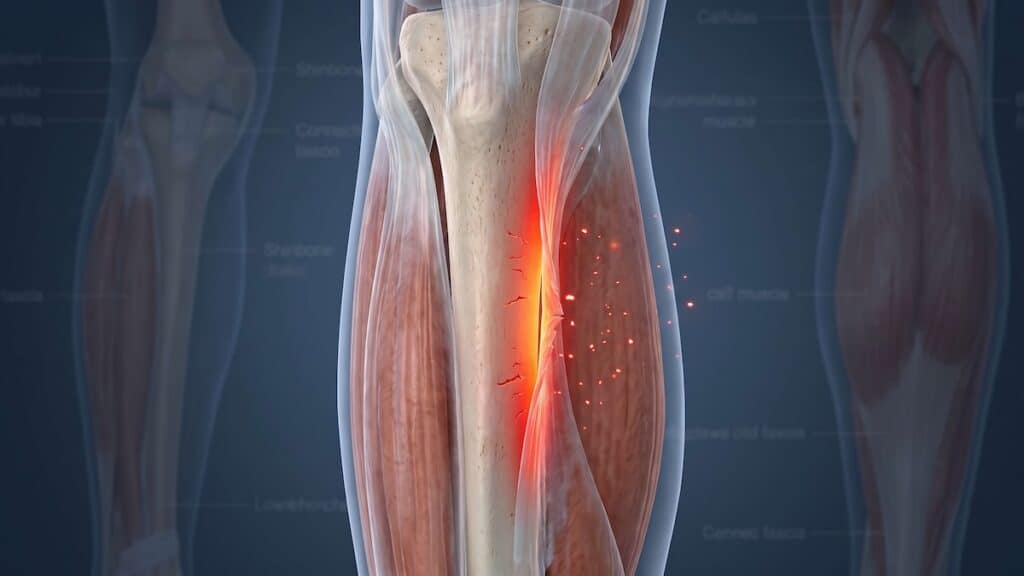
Anatomical illustration of the lower leg showing the tibia and calf muscles with inflammation along the shinbone in medial tibial stress syndrome.

What Are Shin Splints?

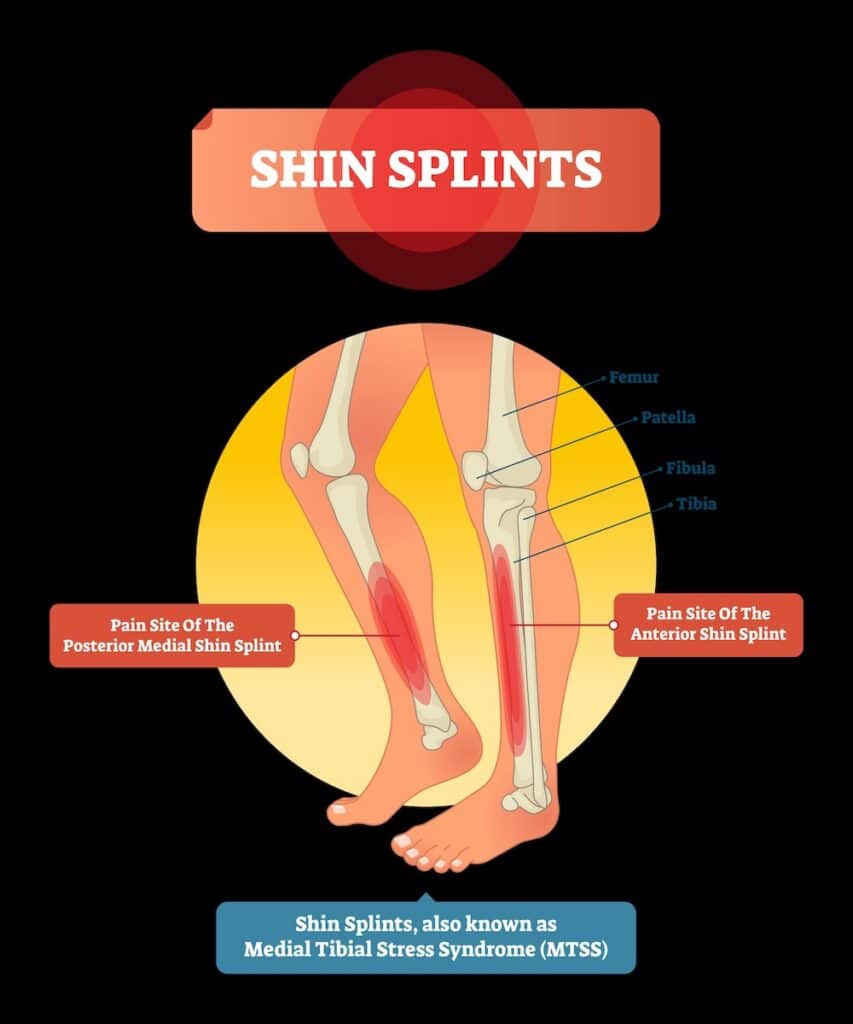
Shin splints, or medial tibial stress syndrome, describe exercise-related pain along the posteromedial — the inner-rear — border of the tibia, or shinbone. The pain typically spreads across a broad band several inches long, aching at the start of activity, sometimes easing as the muscles warm, then returning afterward. It is understood to arise when repetitive loading outpaces the lower leg’s ability to adapt: the soleus and tibialis muscles, the connective tissue that anchors them to the bone, and the bone’s outer lining all take on stress faster than they can recover. Shin splints sit on a spectrum — mild irritation at one end and, if pushed through and ignored, a tibial stress reaction at the other.

Shin splints diagram showing anterior and posterior medial pain sites along the tibia, also known as medial tibial stress syndrome.

Common Symptoms & Causes

The hallmark of shin splints is a diffuse ache along the inner shin. Common signs include:

  • Aching or tender pain along the inner shin, often spread over several inches
  • Pain at the start of a run or workout that may ease as you warm up
  • Tenderness when pressing along the inner edge of the shinbone
  • Pain that returns — and lingers — after activity
  • Tightness in the calves

Common contributors include a sudden jump in training volume or intensity, running on hard surfaces, worn or unsupportive footwear, overpronation or flat feet, tight or weak calf muscles, and returning to activity too quickly after a layoff. Because it is a loading problem, shin splints tend to respond as much to what happens between sessions as to the treatment itself.

Because tight calves overload the shin, the heel, and the back of the leg alike, shin splints often show up alongside plantar fasciitis and calf and Achilles injuries.

The Chinese Medicine Perspective

In traditional Chinese medicine, shin splint pain is understood as a local obstruction of qi and blood in the channels crossing the lower leg—circulation slowed and stagnated by repetitive strain, and sometimes by cold or damp settling into overworked tissue. The aim of care is to free that local flow, release the tight musculature that pulls on the shin, and support the tissue’s natural recovery so the area can tolerate load again.

How We Can Help

Because shin splints are a soft-tissue and bone-stress overuse injury rather than a matter of energy balance alone, care at Acupuncture Zen leads with dry needling and laser therapy.

Dry needling targets the tight, overworked muscles that pull on the shin — especially the soleus and deep calf — releasing trigger points that keep tension on the tibia. A 2024 randomized controlled trial of athletes with medial tibial stress syndrome found that dry needling of the soleus reduced pain and improved ankle range of motion.

Laser therapy — K-Laser and NovoTHOR red-light therapy — is used to help calm inflammation and support tissue recovery at the tender border of the shin. Direct research on laser specifically for shin splints is still limited, so it’s offered here as a supportive comfort measure alongside the needle-based work rather than as a standalone treatment.

Both approaches are understood to support comfort and recovery, and both work best alongside the essentials of shin-splint care: easing training load, correcting footwear and running surface, and rebuilding calf and hip strength. The goal is a lower leg that can take load again — not a quick patch over a training error.

What to Expect at Your Visit

A first visit begins with the story behind the shins — training history, footwear, surfaces, and how the pain behaves before, during, and after activity — along with a hands-on exam of the calf and shin. From there, Dr. Tony builds an individualized plan. Treatment often combines dry needling of the calf musculature with laser therapy directed along the tender border of the tibia. Because shin splints are a loading injury, care usually takes the form of a short course of sessions, paired with clear guidance on how to adjust training so the tissue can recover between visits.

Frequently asked questions

Shin splints usually cause a diffuse ache spread over several inches of the inner shin, while a tibial stress fracture tends to cause sharp, pinpoint pain over one spot, pain at rest or at night, and pain when hopping on the leg. A stress fracture is a medical issue that needs a physician’s evaluation and often imaging — it is not something acupuncture or dry needling treats. If your pain has these features, see a doctor before continuing to train.

Most people are seen for a short course of sessions rather than a single visit, with the plan adjusted as the shin settles. Dr. Tony will give you a realistic sense of timing at your first visit, based on how long the pain has been present and how much you can modify your training.

You can often keep running at a reduced load, but pushing through worsening pain tends to prolong the problem. Part of care is finding the right balance — easing volume and intensity enough to let the tissue recover while keeping you as active as possible.

Most people feel a brief twitch or cramp-like sensation when a trigger point releases, followed by a dull ache that fades quickly. It is generally well tolerated, and Dr. Tony works within your comfort throughout.

Prevention centers on gradual training progression, supportive footwear, adequate calf and hip strength, and respecting early warning aches rather than running through them. Dr. Tony can point you toward the load and strength habits that make recurrence far less likely.

A Complementary Approach

Shin splints heal fastest when treatment and training work together — so this care is meant to sit alongside sensible load management, footwear correction, and strengthening, not replace them.

Please note: if shin pain becomes sharp and pinpointed to one spot, wakes you at night, or persists at rest, see a physician to rule out a tibial stress fracture. Acupuncture Zen does not treat stress fractures, which require medical evaluation.

If you’re ready to ease the shin pain that’s holding back your training, call Acupuncture Zen at 561-633-3537 to schedule a visit in Delray Beach.

Peace and Blessings,

Dr. Tony Willcox, PhD, D.A.O.M., A.P.

Acupuncture Zen logo