


Ear acupuncture for anxiety is one of the gentlest treatments in Chinese medicine. A few fine needles in the outer ear can leave a racing mind noticeably quieter. Yet many people have never tried it, or wonder how the ear could affect the rest of the body.
At Acupuncture Zen in Delray Beach, Dr. Tony Willcox, A.P., often adds ear points to a full-body treatment for patients with stress and anxiety. This guide covers how ear acupuncture works, which points practitioners use, and what the research shows.
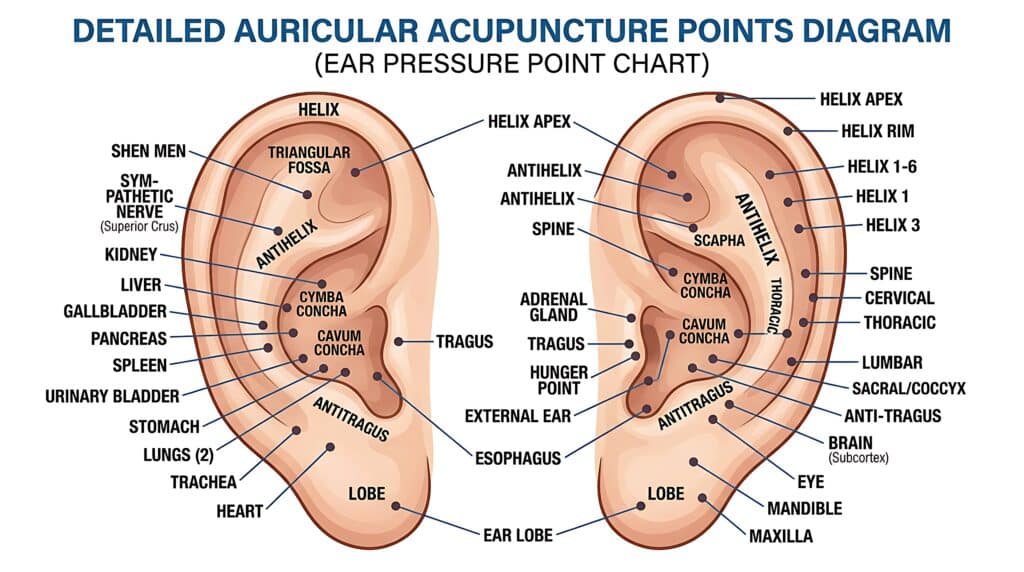
Common auricular acupuncture points mapped on the outer ear.
What Is Ear Acupuncture?
Ear acupuncture, also called auricular therapy, treats the body through points on the outer ear. Practitioners place very fine needles, tiny seeds, or small pellets on specific spots. Each spot traditionally corresponds to a region or system of the body.
Chinese medicine has used ear points for centuries. However, the modern ear map took shape in the 1950s. A French physician, Dr. Paul Nogier, noticed a pattern and published a detailed chart of points across the ear. Today, practitioners in both Chinese and Western traditions use versions of that map.
The Inverted Fetus: How the Ear Map Works
Nogier described the ear as shaped like an upside-down fetus. In this picture, the earlobe relates to the head and face. Meanwhile, the inner curves relate to the organs, and the outer rim relates to the spine and limbs.
In practice, the map guides where the needles go. Some practitioners describe the ear as “holographic,” since the whole body appears on one small surface.
Ear Acupuncture Points for Anxiety
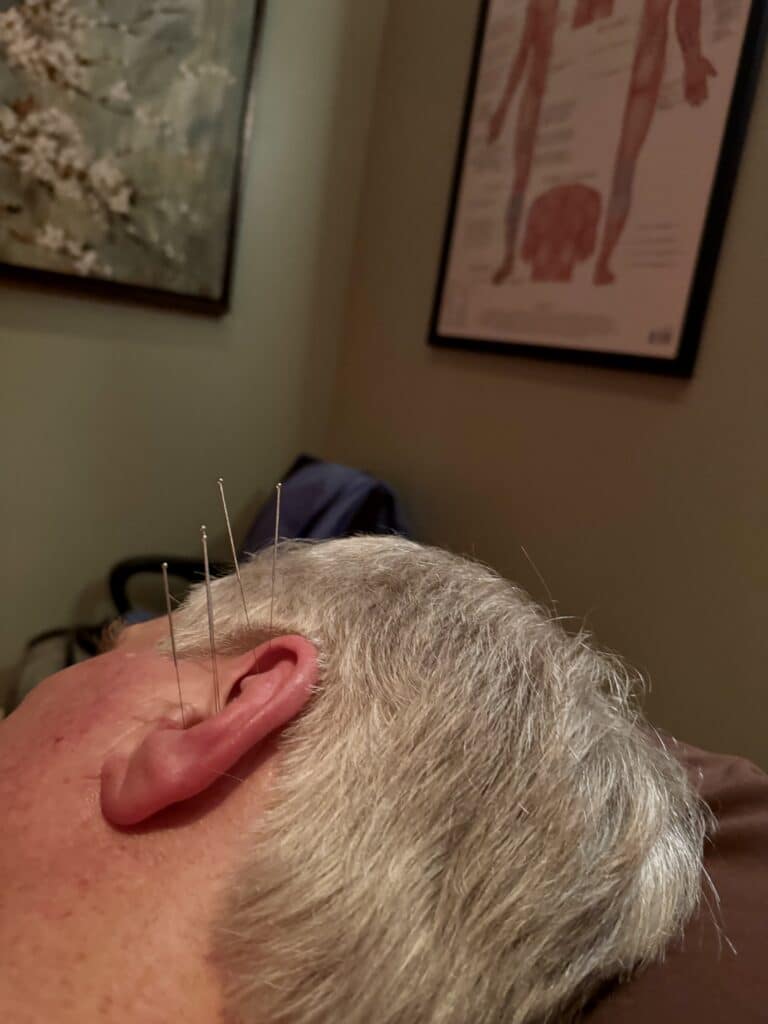
Several fine needles are placed at calming points on the outer ear.
Practitioners return to a handful of ear points again and again for anxiety. The best known include:
- Shen Men, often called the “spirit gate,” traditionally used to calm the mind
- Point Zero, near the center of the ear, used to bring the body toward balance
- Sympathetic point, traditionally used to settle the nervous system
- Heart point, linked in Chinese medicine to sleep and emotional calm
- Kidney point, often added when anxiety comes with fatigue
Dr. Willcox chooses points based on each person’s pattern. As a result, no two ear treatments look exactly alike.
The NADA Protocol
The best-known ear protocol is the NADA protocol. It uses five ear points on each ear, including Shen Men and the sympathetic point. Clinicians at Lincoln Hospital in the Bronx developed it in the 1970s.
Today, addiction programs, shelters, and disaster-relief teams around the world use it. Patients often receive it while seated in a quiet group. Many describe a calm, settled feeling during and after the session — one reason ear acupuncture for anxiety has spread so widely.
Ear Acupuncture for Anxiety: What the Research Shows
The research on ear acupuncture for anxiety is promising, though still developing. A 2007 review of acupuncture for anxiety found the clearest evidence around surgery. In those studies, ear acupuncture appeared more helpful than sham points for anxiety before an operation.
Still, the evidence has limits. Many of the studies were small, and the reviewers found no trials on panic disorder, phobias, or obsessive-compulsive disorder. For pain, a separate 2010 review found that ear acupuncture may help, especially after surgery. Again, the authors called for larger trials.
In short, ear acupuncture may help ease anxiety and support calm. It is not a guaranteed fix, and results vary from person to person.
Ear Seeds: Calm Between Visits
Treatment does not always end when you leave the clinic. Instead, practitioners often tape tiny seeds or pellets to selected ear points. You can then press them gently a few times a day, especially when you feel tense.
Most people keep ear seeds on for a few days. Remove them sooner if the skin becomes sore or irritated.
What to Expect From Ear Acupuncture for Anxiety
At the clinic, ear points usually join a full-body treatment rather than replace it. First, Dr. Willcox asks about your stress, sleep, and daily life. Next, he places a few hair-thin, sterile, single-use acupuncture needles in the outer ear.
Most people feel a brief pinch, followed by warmth or a heavy, relaxed feeling. Many patients rest quietly for 20 to 30 minutes, and some fall asleep.
Ear acupuncture is not a substitute for mental health care. If anxiety becomes severe, or you have thoughts of self-harm, please contact a physician or mental health professional. In a crisis, call or text 988.
Frequently Asked Questions
Does ear acupuncture hurt?
Most people feel a quick pinch as the needle goes in. After that, the sensation usually fades to warmth or a dull ache. Ear seeds use no needles.
How quickly does ear acupuncture for anxiety work?
Many people feel calmer during their first session. For ongoing anxiety, however, ear points usually become part of a weekly plan.
Can I combine ear acupuncture with therapy or medication?
Yes. In fact, ear acupuncture fits well alongside counseling and prescribed medication. Keep your physician informed about any care you add. For more on the research, see does acupuncture help with stress.
If stress and worry have been building, a quiet session may be a good place to start. Call Acupuncture Zen at 561-633-3537 to schedule a visit in Delray Beach.
Peace and Blessings,
Dr. Tony Willcox, PhD, D.A.O.M., A.P.
