


Overactive bladder affects millions of adults — and for many, it means mapping out every bathroom before leaving the house. Acupuncture for overactive bladder has become a popular complementary option for patients looking to ease urgency and frequency without relying solely on medication. At Acupuncture Zen in Delray Beach, Dr. Tony Willcox works with patients to explore how acupuncture for bladder control may support healthier bladder function alongside conventional care.
What Happens in an Overactive Bladder
Overactive bladder, or OAB, occurs when the detrusor muscle contracts before the bladder is actually full. The result is a sudden, hard-to-ignore urge to urinate — sometimes followed by leakage. It can also mean frequent nighttime trips to the bathroom, which disrupts sleep and, over time, wears on quality of life. Because the condition involves both the nervous system and the muscle itself, many patients look for approaches that address more than just the symptom.
How Acupuncture for Overactive Bladder May Help
Traditional Chinese Medicine views bladder control as connected to the body’s broader energetic balance, particularly the Kidney and Spleen systems. From a modern research perspective, acupuncture is thought to influence the nerve pathways between the bladder, spinal cord, and brain — the same circuitry responsible for triggering (or suppressing) the urge to void.
Dr. Willcox often incorporates points such as Sanyinjiao (SP6), located along the lower leg, which research suggests may help calm involuntary bladder contractions. Sacral points near the lower back are also commonly used, as they sit close to the nerve roots that govern bladder signaling. Because acupuncture may help shift the balance between the sympathetic and parasympathetic nervous systems, some patients notice fewer urgent episodes and steadier bladder rhythm over a course of treatment.
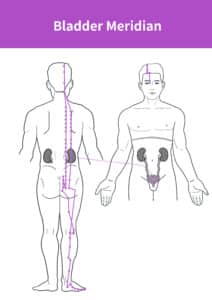
The Bladder meridian runs from the face down the back to the foot, with key points used in OAB treatment near the sacrum.
What the Research Suggests
[A systematic review of randomized controlled trials](https://pubmed.ncbi.nlm.nih.gov/29465566/) examining acupuncture for overactive bladder found it may help reduce urination frequency, incontinence episodes, and nighttime waking. Some trials have found effects comparable to standard OAB medications, with less of the dry mouth or constipation those medications can cause. That said, the review’s authors note evidence is still insufficient to confirm acupuncture’s effect on its own or its added benefit alongside medication — research quality varies across studies, so acupuncture is best approached as a complementary strategy, not a replacement for medical evaluation. Anyone experiencing bladder symptoms should still consult their physician, since OAB can sometimes signal an underlying condition that needs direct medical attention.
What to Expect at Acupuncture Zen
A first visit typically begins with a conversation about symptom patterns — frequency, urgency, nighttime waking, and any triggers a patient has noticed. From there, Dr. Willcox builds a treatment plan that may combine acupuncture with complementary modalities offered at the clinic, adjusting point selection as the body responds over successive sessions. Consistency tends to matter here; most patients pursuing acupuncture for overactive bladder attend a series of visits rather than a single treatment, since nervous system patterns often shift gradually.
A Complementary Approach, Not a Substitute
It’s worth repeating: acupuncture is not a cure for overactive bladder, and results vary from person to person. However, as part of an integrative plan that includes appropriate medical care, many patients find it a useful tool for supporting bladder health and easing the daily disruption OAB can cause. For patients in Delray Beach, Boca Raton, and the surrounding South Florida area who want to explore a natural, complementary approach to bladder symptoms, Acupuncture Zen offers a calm, experienced setting to start that conversation.
If overactive bladder has been affecting your daily routine, consider scheduling a consultation to discuss whether acupuncture might fit into your care plan.
Peace and Blessings, Dr. Tony Willcox, PhD, D.A.O.M.