


Acupuncture for knee pain is one of the best-studied uses of acupuncture in the world. Most of that research focuses on knee osteoarthritis, the wear-and-tear arthritis that makes stairs, long walks, and getting out of a chair harder with time.
At Acupuncture Zen in Delray Beach, Dr. Tony Willcox, A.P., often treats knee pain in golfers, runners, and active retirees. This guide covers what the major trials show, which points practitioners use, and how acupuncture fits with physical therapy and medical care.
Why Knees Hurt
The knee carries much of the body’s weight with every step. Over time, the cartilage that cushions the joint can thin. As a result, the bones move less smoothly, and the joint may ache, stiffen, or swell.
Osteoarthritis is the most common cause of long-term knee pain in adults over 50. Other causes include old sports injuries, meniscus tears, tendon strain, and bursitis. For that reason, a clear diagnosis from a physician matters before any treatment plan.
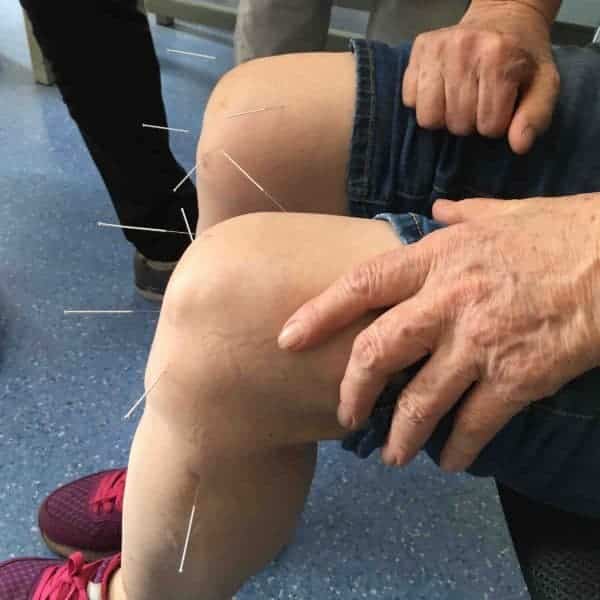
A patient receives acupuncture for knee pain at Anhui University of Chinese Medicine.
Acupuncture for Knee Pain: What the Research Shows
The research is large, and the results are mixed. Here is a fair summary of three key sources:
- In 2019, the American College of Rheumatology and the Arthritis Foundation gave acupuncture a conditional recommendation for osteoarthritis of the knee, hip, and hand.
- A 2021 trial of 480 adults with knee osteoarthritis compared electroacupuncture, manual acupuncture, and sham acupuncture. After eight weeks, more people improved with electroacupuncture than with sham. Both real acupuncture forms showed better results at the 26-week follow-up.
- By contrast, a 2014 Australian trial of 282 adults over 50 found different results. Needle and laser acupuncture were no better than sham for chronic knee pain.
In short, acupuncture for knee pain may help ease pain and improve function for some people, especially with electroacupuncture. Still, results vary, and some well-run trials found little added benefit.
Electroacupuncture for Knee Osteoarthritis
Electroacupuncture adds a gentle electrical current to selected needles. Most people feel it as a light tapping or buzzing. In the 2021 trial, it produced the clearest results, so many practitioners now use it for knee osteoarthritis.
At Acupuncture Zen, we include electroacupuncture with acupuncture at no extra charge.
Acupuncture Points for Knee Pain
Practitioners choose points based on where the pain sits and on each person’s overall pattern. Commonly used points include:
- ST35 (Dubi) and Xiyan, the two hollows on either side of the kneecap
- ST36 (Zusanli), below the knee on the outer shin
- SP9 (Yinlingquan), below the knee on the inner side
- GB34 (Yanglingquan), below the knee on the outer side
- SP10 (Xuehai), above the knee on the inner thigh
In addition, practitioners often treat tight muscles in the thigh and hip, since they change how load moves through the knee.
How Acupuncture Fits With Your Care
Acupuncture works best as one part of a plan. Strengthening exercise remains one of the most reliable ways to protect an arthritic knee. Weight management, good footwear, and physical therapy also help.
Acupuncture for knee pain can sit alongside that work. It does not replace your physician or physical therapist, and it cannot rebuild worn cartilage. If you have had an X-ray or MRI, bring the written report from your doctor to your first visit.
When to See a Doctor First
Some knee problems need a medical evaluation before other care. See a physician if you notice:
- A knee that locks, gives way, or cannot bear weight
- Sudden swelling, redness, or heat in the joint
- Pain after a fall or a twisting injury
- Fever along with a painful, swollen knee
What to Expect at Acupuncture Zen
At your first visit, Dr. Willcox asks about your knee, your activity, and your goals. Next, he checks how the knee, hip, and ankle move. He then places fine, sterile, single-use needles around the knee and along the leg.
Most people feel a brief pinch, followed by warmth or a dull ache. Many plans start with one or two visits a week. For comparison, the 2021 trial used three sessions a week for eight weeks. Dr. Willcox may also suggest laser therapy for pain and inflammation.
Frequently Asked Questions
How many sessions of acupuncture for knee pain will I need?
It varies. Treatment plans ranged from 12 to 24 sessions. After a few visits, Dr. Willcox reviews your progress and adjusts the plan.
Can acupuncture help me avoid knee replacement?
There is no evidence that acupuncture prevents or delays knee replacement. However, it may help ease pain while you work on strength and mobility. Follow your surgeon’s advice on timing.
Is acupuncture for knee pain safe?
Side effects are usually minor, such as brief soreness or a small bruise. Tell your acupuncturist about blood thinners, a pacemaker, or a recent knee injection.
If knee pain is limiting your walks, your golf game, or the stairs at home, a conservative option may be worth exploring. Call Acupuncture Zen at 561-633-3537 to schedule a visit in Delray Beach.
Peace and Blessings,
Dr. Tony Willcox, PhD, D.A.O.M., A.P.
