


Acupuncture for Lumbar Spinal Stenosis: What the Research Shows
Lumbar spinal stenosis has a way of shrinking your world. Walking, standing, or even a trip through the store can become a negotiation with pain. Acupuncture for lumbar spinal stenosis has drawn serious attention lately — and for good reason. Recent research suggests it may ease the discomfort and improve the function that stenosis steals. It does not reverse the narrowing. Instead, it offers a gentle, drug-free complement to conventional care, the kind of work Dr. Tony Willcox has refined over two decades in Delray Beach.
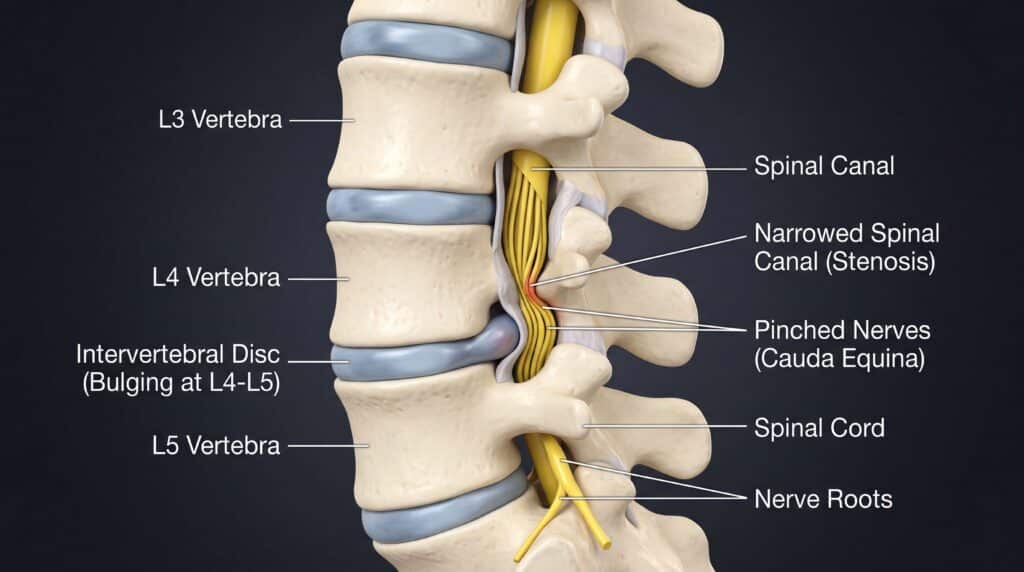
What Lumbar Stenosis Does to the Body
Lumbar spinal stenosis is a narrowing of the spaces in the lower spine, usually from age-related changes — thickened ligaments, bone spurs, or bulging discs. As those spaces tighten, they crowd the nerves that travel down the back and into the legs. The result is a telltale pattern called neurogenic claudication. Pain, numbness, or heaviness builds in the legs with standing and walking, then eases when you sit or lean forward. Many patients notice they can push a grocery cart comfortably because leaning forward opens the space back up.
What the Research Shows
Here is where acupuncture for lumbar spinal stenosis gets interesting. A multicenter randomized trial published in Annals of Internal Medicine tested acupuncture against sham treatment in patients with degenerative lumbar spinal stenosis. After a course of sessions, the acupuncture group showed meaningful improvement in disability and daily function — the practical business of standing, walking, and moving through the day. That matters because rigorous, sham-controlled evidence in this condition has been scarce. The findings do not suggest that acupuncture widens the canal. Rather, they suggest it may help the body cope with the symptoms that narrowing creates.
How Acupuncture and Laser Therapy May Help
So how might a few thin needles change how a compressed nerve feels? Several mechanisms likely work together.
Pain modulation – Acupuncture is understood to influence how pain signals are processed.
Reduced inflammation – Calming irritation around crowded nerve roots may ease the burning and heaviness.
Muscle release – The paraspinal muscles often lock down in protest, and releasing them improves comfort.
Light-based support – Laser therapy adds another layer — a meta-analysis found low-level laser therapy relieved chronic low back pain, and the clinic pairs acupuncture with K-Laser and whole-body NovoTHOR red light for recovery. This is familiar terrain for Dr. Tony. Over two decades, he has helped elite athletes work through demanding spine complaints — and the same whole-person approach carries over to everyday stenosis. For the clinic’s full approach, see our lumbar spinal stenosis treatment page
What to Keep in Mind
Above all, this is a complement — never a replacement for medical care. Stenosis is structural, and some cases need physical therapy, injections, or surgery. Therefore, patients are always encouraged to keep working with their physician and to report any progressive weakness, numbness, or changes in bladder or bowel control right away. If stenosis is narrowing your days along with your spine, Dr. Tony would be glad to talk through whether this drug-free approach fits your recovery. Reach the Delray Beach clinic to schedule a consultation. Phone: 561-633-3537.
Peace and Blessings,
Dr. Tony Willcox, PhD, D.A.O.M., A.P.
