TMJ & Jaw Pain Relief in Delray Beach
Medically reviewed by Dr. Tony Willcox, PhD, D.A.O.M., A.P.
Last reviewed: September 2026



Medically reviewed by Dr. Tony Willcox, PhD, D.A.O.M., A.P.
Last reviewed: September 2026
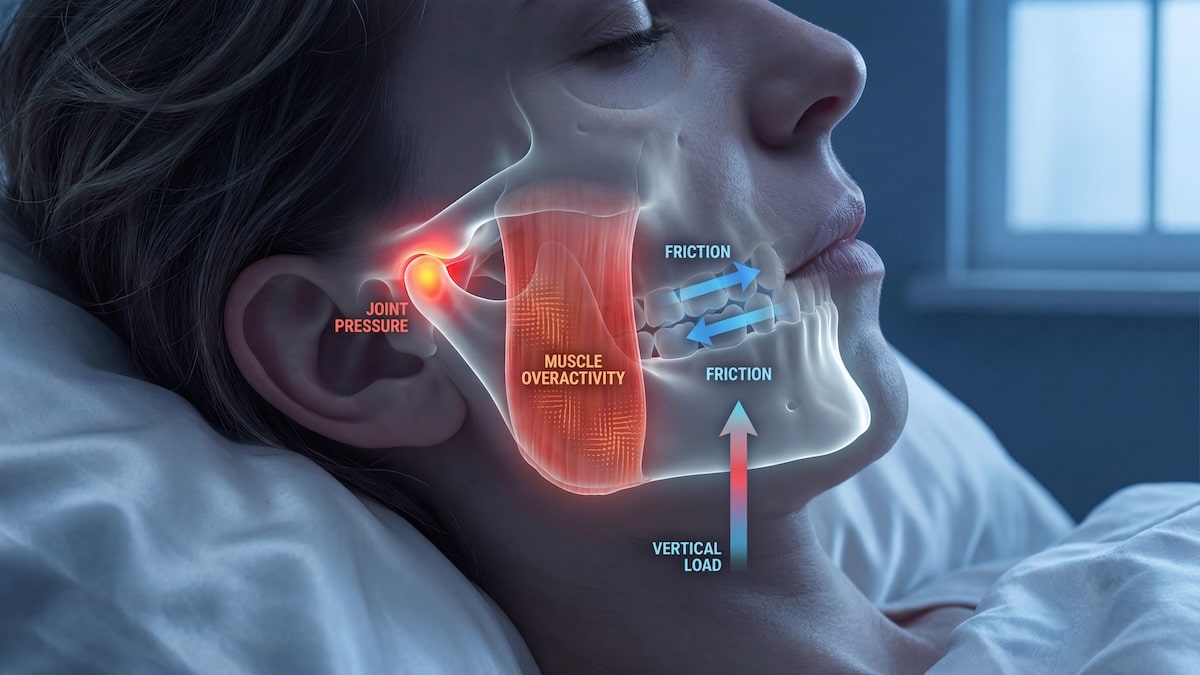
Temporomandibular disorders (TMD), often referred to by the joint’s name (TMJ), are a group of conditions affecting the jaw joint and the muscles that move it. The temporomandibular joint connects the jaw to the skull and works constantly — every time you speak, chew, or yawn — so when it or its surrounding muscles become strained or inflamed, the effects are hard to ignore. TMD can stem from muscle tension and clenching, joint problems, arthritis, or a mix, and it often overlaps with stress, teeth grinding, and neck tension.
TMD can produce a range of symptoms, commonly including:
Common contributors include jaw-muscle tension and clenching or grinding (often stress-related), joint issues, injury, or arthritis. Because TMD can have several causes — and because dental and jaw-joint problems require proper diagnosis — evaluation by a dentist or physician is generally considered worthwhile, especially for persistent pain, jaw locking, or a significant change in the bite. Acupuncture is used to support the muscle-related pain and tension within that care.
In Chinese medicine, the jaw sits at a crossroads of channels — including the Stomach and Gallbladder — that run across the face and around the joint. TMD pain is often understood as Qi and Blood stagnation and muscular tension along these channels, frequently tied to stress and the clenching it drives, sometimes with Wind or Heat contributing to acute flare-ups. Treatment aims to release the tight jaw and facial muscles, move stagnation, and ease the tension — often stress-related — that keeps the jaw clenched.
For TMD, acupuncture is used to release the tight muscles of the jaw, face, and neck that drive so much jaw pain, ease the clenching that often underlies it, and calm the stress that further tightens everything. Local points around the jaw and face are typically combined with points elsewhere on the body, and because stress and clenching are so often involved, this care overlaps with the way many patients use acupuncture for tension and stress.
A 2024 systematic review and meta-analysis of acupuncture and laser acupuncture for TMD found that acupuncture was helpful in the short term for reducing muscle-related jaw pain, while concluding that the overall evidence is limited and longer, larger studies are needed (Di Francesco et al., BMC Oral Health, 2024). The review also reported encouraging results for laser acupuncture, a light-based approach similar to the K-Laser therapy offered here. Acupuncture is best seen as a complementary option for jaw pain and tension — not a stand-alone cure — to be used alongside dental and medical care.
A first visit begins with a conversation about the jaw pain — where it hurts, what makes it worse, whether there’s clicking or locking, and whether clenching, grinding, or stress is part of the picture — plus what dental or medical evaluations have taken place. Dr. Willcox will assess the jaw and the surrounding muscles of the face, head, and neck before selecting a point protocol, often combining gentle local points around the jaw with points that address stress and tension. Because muscle tension builds over time, relief often improves over a series of sessions.