Whiplash & Neck Injury Relief in Delray Beach
Medically reviewed by Dr. Tony Willcox, PhD, D.A.O.M., A.P.
Last reviewed: September 2026




Medically reviewed by Dr. Tony Willcox, PhD, D.A.O.M., A.P.
Last reviewed: September 2026
Whiplash — clinically, whiplash-associated disorder — is a neck injury caused by a rapid back-and-forth motion of the head, most often from car collisions or sports impacts. That sudden acceleration and deceleration can strain the muscles, ligaments, and soft tissues of the cervical spine. Symptoms may appear right away or surface a day later. Because a significant neck injury can occasionally involve more than soft tissue, medical evaluation is the essential foundation — both to gauge severity and to rule out injury that needs specific treatment.
Whiplash tends to follow a familiar arc:
Most whiplash follows motor-vehicle or sporting impacts. However, because certain warning signs — severe pain, numbness, weakness, or symptoms spreading down the arms — can point to nerve involvement, prompt medical evaluation matters.
In some cases, the neck-muscle tension that lingers after whiplash can contribute to thoracic outlet syndrome, where nerves near the collarbone become compressed.
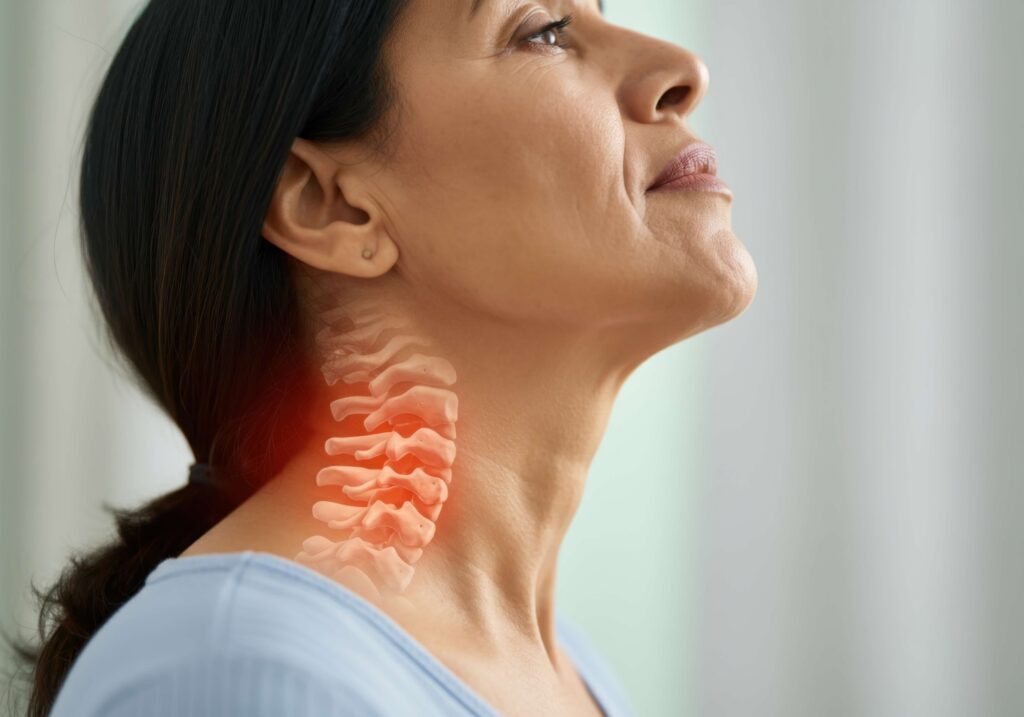
In Chinese medicine, the pain and stiffness of whiplash are often understood as a traumatic obstruction of Qi and Blood in the channels crossing the neck and shoulders — a “stagnation” that the treatment aims to move. Cold or tension can compound it, tightening the sinews further. This framework guides an individualized approach that aims to free the channels and ease the muscles. Points such as Fengchi (GB20), Jianjing (GB21), and Hegu (LI4), along with local tender points, are commonly associated with this goal, though the specific prescription always depends on the person Dr. Willcox is treating.
For whiplash, acupuncture is used as a possible complement for neck pain and stiffness — thought to work partly by relaxing muscle tension and engaging the body’s own pain-modulating pathways. As part of a broader dry needling and sports-injury approach, it fits naturally into recovery-focused care. The evidence is encouraging. A 2024 systematic review and meta-analysis of randomized controlled trials found that acupuncture improved neck pain and cervical range of motion in people with whiplash-associated disorder compared with usual care (Lee et al., BMJ Open, 2024). Acupuncture is offered as a supportive complement — working alongside the medical care a neck injury may require, rather than in place of it.
A first visit begins with the injury story — how it happened, what hurts, how far the neck moves, and what a physician has already assessed. Dr. Willcox draws on years of sports-injury and rehabilitation work to tailor a gentle approach, often combining acupuncture with soft-tissue techniques and practical movement guidance. Care is adjusted to how tender and irritable the neck is on any given day. Throughout, acupuncture is coordinated with — never a substitute for — the medical care that manages the injury.