Bell's Palsy (Facial Paralysis)
Medically reviewed by Dr. Tony Willcox, PhD, D.A.O.M., A.P.
Last reviewed: September 2026



Medically reviewed by Dr. Tony Willcox, PhD, D.A.O.M., A.P.
Last reviewed: September 2026
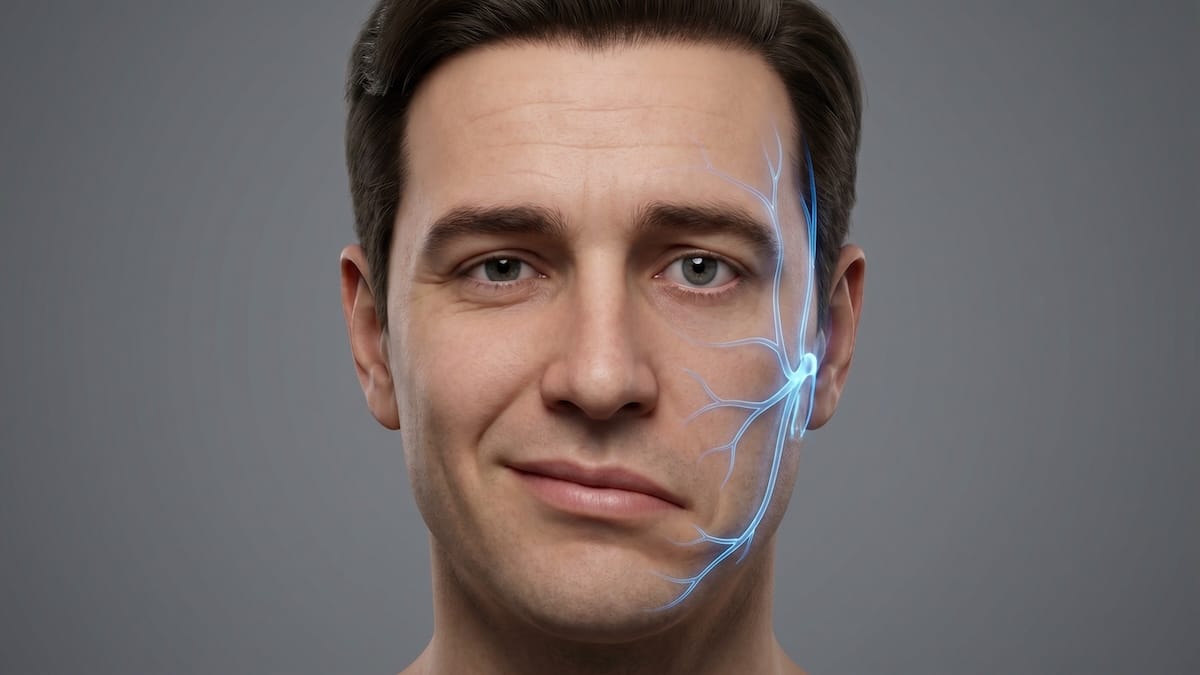
Bell’s palsy is a sudden, usually temporary weakness or paralysis of the muscles on one side of the face, caused by inflammation of the facial nerve. It often develops rapidly, over hours to a day or two, and can make it hard to close an eye, smile, or move the affected side. The exact cause isn’t fully understood, but it is frequently linked to viral inflammation of the nerve. The encouraging news is that Bell’s palsy has a high natural recovery rate — most people regain much or all of their facial function within weeks to months, especially with prompt treatment. A smaller group is left with lingering weakness, which is where extra support during recovery can matter.
Important: because a sudden facial droop can also be a sign of stroke, it must be evaluated by a physician right away to confirm the diagnosis.
Bell’s palsy typically appears suddenly on one side of the face. Symptoms include:
The cause is inflammation of the facial nerve, often associated with viral infections such as herpes simplex. Risk factors include pregnancy, diabetes, recent viral illness, and family history. Standard medical treatment usually involves corticosteroids started early — ideally within the first few days — sometimes with antiviral medication.
In Chinese medicine, facial paralysis has been recognized for centuries, traditionally described as deviated mouth and attributed to an invasion of external wind into the channels of the face when the body’s protective Qi is weakened. This invasion is understood to obstruct the flow of Qi and Blood through the facial channels, leaving the muscles unable to function. Treatment aims to expel the wind, restore circulation to the affected area, and re-awaken the facial channels. Because the acute early phase is addressed differently from later recovery, Dr. Willcox tailors point selection to the condition’s stage.
Acupuncture for Bell’s palsy is thought to work by improving circulation to the facial nerve and muscles, reducing inflammation, and stimulating the nerve and muscle tissue to support recovery. For facial paralysis, electro-acupuncture — gentle electrical stimulation of the needles — is often used to help re-activate the affected muscles.
Research suggests it can help, particularly as an adjunct. A systematic review and meta-analysis of 14 randomized trials found that acupuncture was associated with a higher recovery response rate in Bell’s palsy, though the authors cautioned that the quality of the included studies was limited and results should be interpreted with caution. Evidence also suggests acupuncture works best when combined with standard medical treatment and started early rather than late. Because Bell’s palsy often improves on its own, acupuncture is best understood as supportive care that may help the process along — especially valuable for those whose recovery is slow or incomplete.
At Acupuncture Zen, Bell’s palsy is approached with acupuncture and electro-acupuncture, and where appropriate other supportive modalities — always alongside, never in place of, a physician’s care and prescribed treatment.
A first visit begins with a conversation about when the paralysis began, the diagnosis, and any medications prescribed — since starting treatment early tends to help. Treatment involves fine needles placed at points on the face and body, often with gentle electro-stimulation to encourage muscle activation, followed by a period of rest. Because nerve recovery takes time, treatment is usually a series of sessions over several weeks. Dr. Willcox coordinates with a patient’s physician and, importantly, reinforces the need to protect the affected eye, since an eye that won’t fully close is vulnerable to drying and injury.