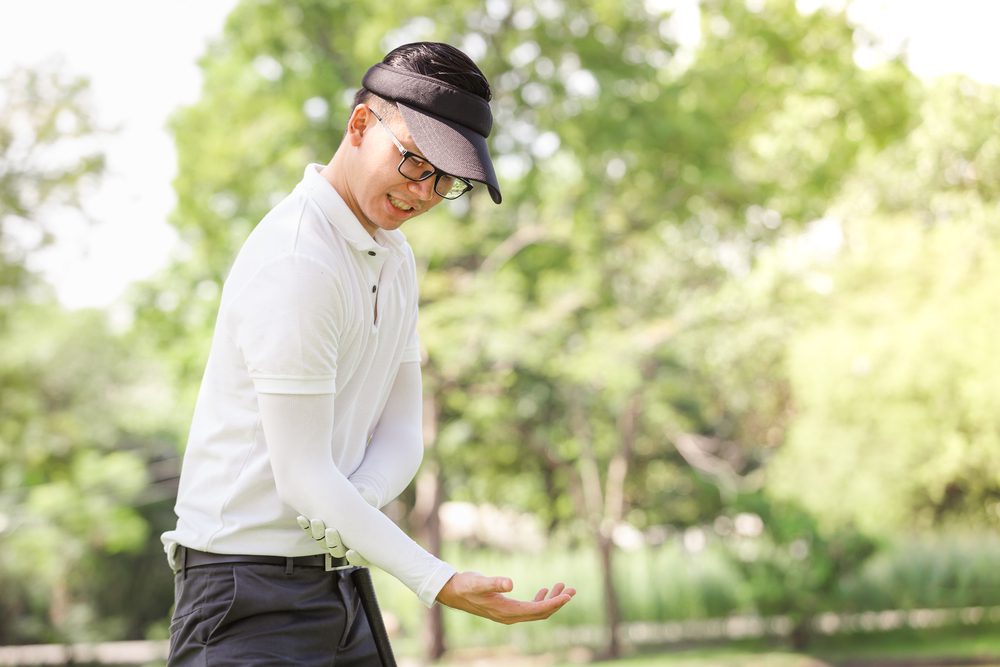

Golfer’s Elbow (Medial Epicondylitis)

Inner Elbow Pain Relief in Delray Beach

Medically reviewed by Dr. Tony Willcox, PhD, D.A.O.M., A.P.
Last reviewed: September 2026

That nagging pain on the inside of the elbow — the ache that flares when you grip, lift, or twist — is the signature of golfer’s elbow. And despite the name, you don’t have to golf to get it. At Acupuncture Zen in Delray Beach, acupuncture and dry needling for golfer’s elbow are offered as targeted, drug-free approaches that may help ease pain and restore function. This is an area that plays directly to Dr. Willcox’s dry needling expertise and his broader work with sports injuries.

Person holding a painful elbow with inflammation highlighted — golfer's elbow (medial epicondylitis) care at Acupuncture Zen in Delray Beach

What Is Golfer's Elbow?

Golfer’s elbow, known medically as medial epicondylitis, is a tendinopathy — a breakdown and irritation of the tendons that attach the forearm’s flexor muscles to the bony bump on the inner side of the elbow, the medial epicondyle. It is caused by repetitive gripping, wrist flexion, and forearm rotation, which over time overload and degrade the tendon. Golfers get it from the swing, but so do weightlifters, throwers, carpenters, and office workers who grip a mouse all day. It is the mirror image of tennis elbow, which affects the outer elbow. Because the ulnar nerve runs close to the medial epicondyle, and because other conditions can cause inner-elbow pain, an accurate diagnosis is worthwhile.

Common Symptoms & Causes

Golfer’s elbow centers on the inner elbow and forearm. Common symptoms include:

  • Pain and tenderness on the inner side of the elbow
  • Pain that worsens with gripping, lifting, or wrist movement
  • Stiffness in the elbow, and sometimes weakness in the grip
  • Aching that radiates into the forearm
  • Occasional tingling or numbness in the fingers, if the nerve is involved

The core cause is repetitive strain that overloads the flexor tendons faster than they can recover, leading to microscopic damage and degeneration rather than simple inflammation. This is why rest alone often isn’t enough — the tissue needs a stimulus to heal, which is where targeted needling comes in.

The Chinese Medicine Perspective

In Chinese medicine, golfer’s elbow is understood as a local obstruction of Qi and Blood in the channels and sinews crossing the elbow — the stagnation that overuse and strain create, producing pain and stiffness. Cold, damp air settling into an overworked area can deepen the blockage. Treatment aims to relieve stagnation, restore circulation to the tendon, and relieve surrounding muscular tension. Dr. Willcox combines this channel-based approach with a precise, modern understanding of the affected muscles and tendons.

How Acupuncture May Help Golfer's Elbow

For a tendon problem like golfer’s elbow, dry needling is often the centerpiece — fine needles placed directly into the affected muscles and trigger points of the forearm flexors, and near the tendon’s attachment, to stimulate a local healing response, release tight bands, and improve blood flow to tissue that heals slowly on its own. Acupuncture points along the arm and body may be added to ease pain and support recovery, sometimes with electro-acupuncture or cupping.

The strongest research here is for tennis elbow, the closely related condition on the other side of the elbow: a 2024 systematic review and meta-analysis found that dry needling produced good improvements in pain, function, and grip strength for lateral epicondylitis. Golfer’s elbow shares the same underlying tendinopathy and is treated with the same targeted approach, though it has fewer studies of its own. In practice, acupuncture and dry needling are widely used, often as part of a plan that also includes activity modification and strengthening.

At Acupuncture Zen, golfer’s elbow is often addressed with dry needling and acupuncture, sometimes with electro-acupuncture or cupping — always as a complement to appropriate medical care and rehabilitation.

What to Expect at Your Visit

A first visit begins with a conversation about the elbow — how the pain started, which movements aggravate it, and any diagnoses already made — followed by a hands-on assessment to locate tender points and involved muscles. Treatment typically involves dry needling of the forearm flexors and points around the elbow, sometimes with electro-stimulation, followed by a period of rest. Many patients notice improvement over a short series of sessions. Because tendon healing takes time and load management matters, Dr. Willcox often pairs treatment with guidance on activity and coordinates with a patient’s physician or physical therapist.

Frequently asked questions

Yes — for a tendon problem like golfer’s elbow, dry needling is often the centerpiece. Fine needles are placed directly into the affected forearm flexor muscles and near the tendon to release tight bands, stimulate a local healing response, and improve blood flow to tissue that heals slowly on its own. It’s an area that plays directly to Dr. Willcox’s dry needling certification.

They’re mirror images. Golfer’s elbow (medial epicondylitis) affects the tendons on the inner side of the elbow, while tennis elbow (lateral epicondylitis) affects the outer side. Both are overuse tendinopathies treated with the same targeted needling approach — and you don’t have to play either sport to get them.

Because golfer’s elbow is a tendon degeneration, not simple inflammation, the tissue often needs a stimulus to heal rather than just time off. That’s exactly what targeted needling provides — prompting a local healing response in a tendon that heals slowly on its own — usually paired with activity changes and strengthening.

They use similar fine needles, but with a different emphasis: dry needling targets muscular trigger points and tissue directly to release tension and stimulate healing. At the same time, traditional acupuncture works with the body’s channels and points. Dr. Willcox is certified in dry needling and often combines it with other techniques for musculoskeletal conditions like golfer’s elbow.

It depends on how long the problem has been present and how much the tendon has degenerated. Many people improve over a short series of sessions, though chronic cases may need more, along with attention to the activities that caused the strain.

A Complementary Approach

Golfer’s elbow can turn simple daily tasks into painful ones — and targeted needling offers one effective, drug-free avenue toward relief. It is offered here as a complement to conventional care and rehabilitation, never a substitute for medical evaluation, particularly if pain is severe, persistent, or accompanied by numbness. Patients are encouraged to keep their physician or physical therapist informed as part of a coordinated approach.

Ready to get your grip back and shake that inner-elbow ache? Call Acupuncture Zen at 561-633-3537 to schedule a visit in Delray Beach.

Peace and Blessings,
Dr. Tony Willcox, PhD, D.A.O.M., A.P.

Acupuncture Zen logo