Herniated Disc & Back Pain Relief in Delray Beach
Medically reviewed by Dr. Tony Willcox, PhD, D.A.O.M., A.P.
Last reviewed: September 2026



Medically reviewed by Dr. Tony Willcox, PhD, D.A.O.M., A.P.
Last reviewed: September 2026
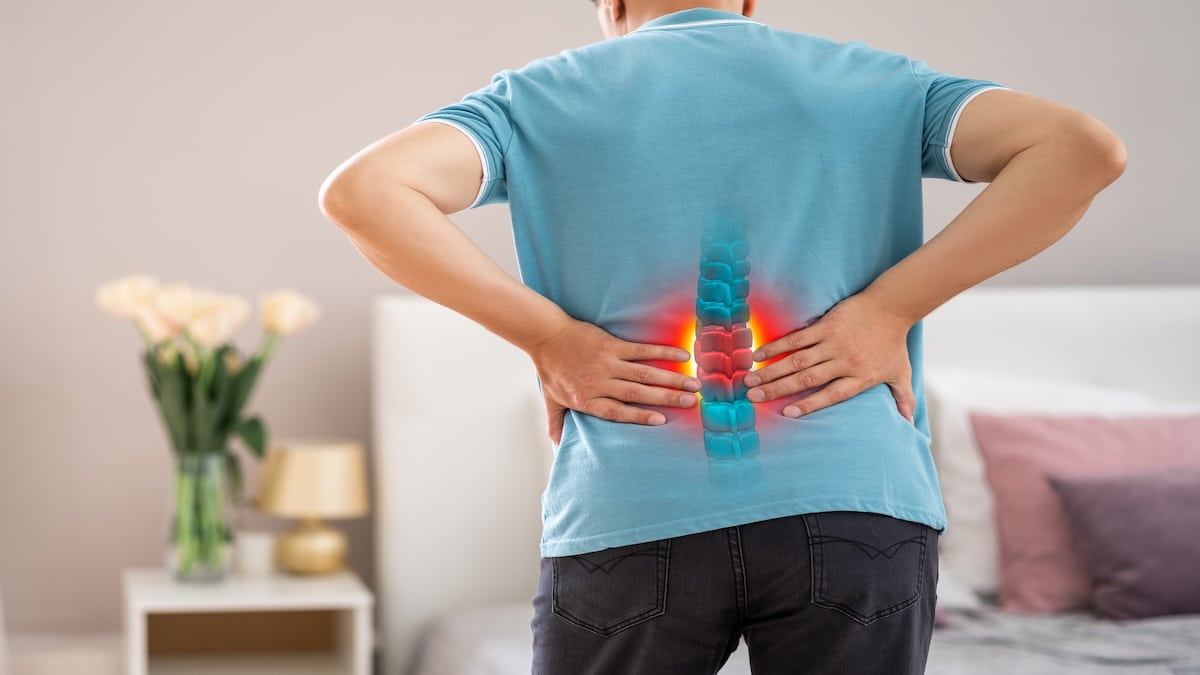
The disks between your vertebrae act as cushions, each with a soft center and a tougher outer ring. A herniated disk, also called a slipped or ruptured disk, occurs when the soft center pushes through a weak spot in the outer ring. If the displaced material presses on a nearby nerve root, it can cause pain, numbness, or weakness that radiates along the nerve’s path — most commonly producing back pain and sciatica, the shooting leg pain of a compressed nerve. Herniated disks are most common in the lower back, often between ages 30 and 50. Encouragingly, most improve over weeks to months with non-surgical care, and surgery is reserved for a minority of cases.
Important: a herniated disk that causes loss of bladder or bowel control, numbness in the groin or inner thighs, or rapidly worsening leg weakness is a medical emergency — seek immediate care.
A herniated disk’s symptoms depend on its location and whether it presses on a nerve. Common symptoms include:
Herniated disks result from age-related disk wear, sudden strain or injury, heavy lifting with poor mechanics, and repetitive stress. Genetics and lifestyle factors play a role too. Because the symptoms overlap with other conditions, and because a small number of cases are serious, an accurate diagnosis is an essential first step.
In Chinese medicine, the pain of a herniated disk is understood as an obstruction of Qi and Blood in the channels of the lower back and leg — often where cold, damp, or injury has caused stagnation, compounded by an underlying deficiency of the Kidney system, which governs the lower back and bones. Treatment aims to move the stagnation, free the obstruction along the affected channel, relieve the surrounding muscular tension, and support the underlying foundation. Dr. Willcox tailors the approach to each person’s pattern and the path of their pain.
For the pain of a herniated disk, dry needling and acupuncture are thought to work by easing the muscle spasm and guarding that surround an irritated nerve, calming the nervous system’s amplification of pain, reducing inflammation around the nerve root, and prompting the release of the body’s natural pain-relieving compounds. Electro-acupuncture is often added for nerve-related pain.
The research is encouraging. A 2026 systematic review and meta-analysis of eleven trials found that acupuncture significantly reduced leg pain and improved function in people with chronic sciatica caused by a herniated disk — with benefit seen against both sham and standard care, though most studies were from China, so wider research would strengthen the picture. Because herniated disks are a leading cause of the back pain and sciatica that acupuncture is well-studied for, it fits naturally into a non-surgical plan.
At Acupuncture Zen, herniated disk pain is often addressed with acupuncture, dry needling, and electroacupuncture, sometimes with cupping — always as a complement to appropriate medical care and rehabilitation.
A first visit begins with a thorough conversation about the pain — where it travels, what makes it better or worse, and any diagnosis or imaging already done. Dr. Willcox may assess movement and locate areas of muscular tension. Treatment involves fine needles placed both locally around the spine and along the path of the affected nerve, often with electrostimulation, followed by a period of rest. Because disk-related pain eases gradually, treatment is usually a series of sessions. Dr. Willcox coordinates with a patient’s physician and will refer promptly if any warning signs appear.