


Sprain

Overview

A sprained ankle, wrist, or knee can happen in an instant — a misstep off a curb, a landing gone wrong — and leave you with swelling, bruising, and pain that lingers for weeks. At Acupuncture Zen in Delray Beach, some patients turn to acupuncture as a complementary way to manage the pain and stiffness of a sprain during recovery. Dr. Tony Willcox, A.P., uses acupuncture as one supportive part of a broader recovery plan, always alongside proper medical care and rehabilitation.
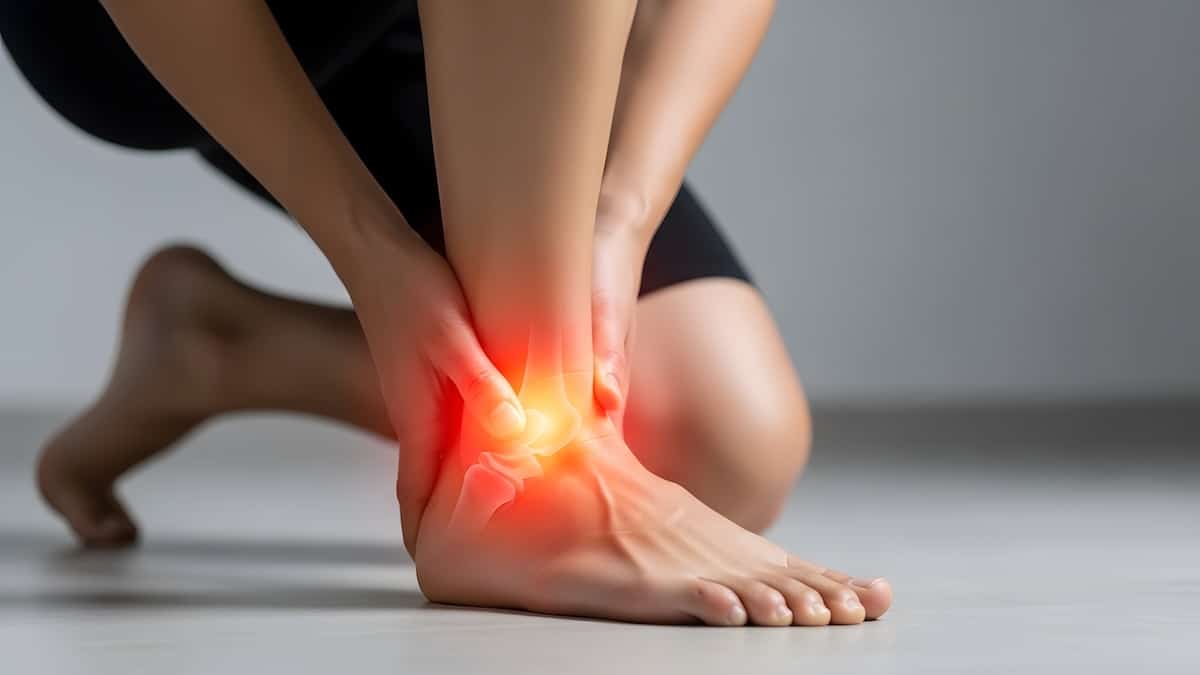
Person kneeling and holding a bare ankle with the joint glowing red and orange to show a sprain, sprain acupuncture in Delray Beach

What Is a Sprain?

A sprain is an injury to a ligament — the tough bands of tissue that connect bone to bone and stabilize a joint — usually from a sudden twist, stretch, or impact that forces the joint beyond its normal range. Sprains are graded by severity, from mild overstretching to a partial or complete tear, and the ankle is by far the most commonly sprained joint, though the wrist, knee, and thumb are also frequent. They’re distinct from strains, which affect muscles and tendons rather than ligaments.

Common Symptoms & Causes

A sprain typically brings:

  •     Pain and tenderness around the affected joint
  •     Swelling and bruising, often developing quickly
  •     Stiffness and reduced range of motion
  •     A feeling of instability or weakness in the joint
  •     Sometimes a ‘pop’ at the moment of injury

Sprains happen when a joint is forced beyond its normal limits — rolling an ankle, landing awkwardly, or a direct blow. Standard early care follows the familiar rest, ice, compression, and elevation approach. Because a severe sprain can involve a significant or complete ligament tear — and because what feels like a sprain can sometimes be a fracture — a medical evaluation is considered important when pain is severe, the joint can’t bear weight, or swelling is significant.

The Chinese Medicine Perspective

In Chinese medicine, a sprain is a clear example of local Qi and Blood stagnation: sudden trauma blocks the free flow through the joint, and the resulting congestion manifests as swelling, bruising, pain, and stiffness. The guiding principle — free flow, no pain — frames treatment around moving that stagnation, dispersing the swelling, and restoring circulation so the area can heal. Points are often chosen both around the joint and at distal sites, sometimes on the opposite limb in the early, acutely tender stage.

How Acupuncture May Help

For a sprain, acupuncture is used to help ease pain, reduce the surrounding muscle guarding and tension, and support circulation to the injured joint as it recovers. It pairs naturally with the rest, rehabilitation, and gradual return to movement that drive real recovery from a sprain.

For the muscle tension and trigger points that build up around a guarded joint, dry needling is often used to release those areas, and for soft-tissue and inflammatory injuries, light-based therapies like K-Laser and NovoTHOR red-light therapy are also used to support recovery.

It’s worth being straight about the evidence. A Cochrane review of acupuncture for acute ankle sprains concluded that, because of the very low quality of the available studies, it could not determine whether acupuncture is more effective than standard treatments (Kim et al., Cochrane Database of Systematic Reviews, 2014). Some individual studies have been encouraging, but the research base is thin. So acupuncture is offered as a low-risk, complementary option for comfort during recovery — not a proven treatment, and not a substitute for proper care of the injury.

What to Expect at Your Visit

A first visit begins with a conversation about how the injury happened, how severe it is, whether the joint has been medically evaluated, and where you are in recovery. Dr. Willcox will assess the joint and the surrounding area before selecting a gentle approach — which in the acute, tender stage may focus on points away from the injury before working more locally as healing progresses. Treatment is coordinated with a patient’s medical care and rehabilitation, and paced to support the natural healing of the ligament rather than rush it.

Frequently asked questions

Acupuncture doesn’t repair a torn ligament — a significant or complete tear may require bracing, specific rehabilitation, or, in some cases, surgical care. It may support pain relief and comfort during recovery, as part of a broader plan. Severe sprains should be evaluated by a physician.

If you can’t bear weight, the pain or swelling is severe, or there’s obvious deformity, see a physician — what feels like a sprain can sometimes be a fracture. Acupuncture is never a substitute for evaluating a potentially serious injury.

This depends on the nature of the injury and your medical guidance. Dr. Willcox coordinates timing with your care and adapts the approach to how acute or settled the injury is.

Most patients describe a dull ache or muscle release rather than sharp pain, and the injured joint itself is treated gently. Needle sensations are explained beforehand so nothing feels unexpected.

Complementary Care Note

Acupuncture at Acupuncture Zen is offered as a complement to — never a replacement for — the care of your physician or specialist. A severe sprain can involve a significant ligament tear or an underlying fracture, so inability to bear weight, severe pain or swelling, obvious deformity, or a joint that gives way should be evaluated promptly. Patients are encouraged to keep their care team informed of all treatments in progress.

Ready to explore whether acupuncture may support your recovery from a sprain? Contact Acupuncture Zen at 561-633-3537 or visit the clinic at 900 E Atlantic Ave, Suite 11, Delray Beach, FL to schedule a consultation with Dr. Tony Willcox, A.P.