


Plant medicine integration with acupuncture begins with a simple idea — the journey does not end when the ceremony does. Interest in plant medicines and psychedelics continues to grow. As a result, more people are looking for ways to make sense of what they experienced. Some come for healing. Others come for trauma work or self-discovery. In each case, the weeks that follow can matter as much as the experience itself. That is where acupuncture may help.
At Acupuncture Zen in Delray Beach, Dr. Tony Willcox, A.P., works with people in that after-phase — the integration window. He holds two doctorates, including a PhD in acupuncture from Anhui University of Chinese Medicine in China. His focus is the body — calming the nervous system, steadying sleep, and helping people feel grounded again.
One point needs to be clear. Acupuncture Zen does not provide, source, or recommend plant medicines or psychedelics. The clinic’s role begins after the journey — with the body.
What Is Plant Medicine Integration?
Integration is the process of bringing an experience into daily life. After a ceremony or guided session, insights can feel vivid — yet hard to hold onto. Old habits return. Emotions surface without warning. Sleep may shift for a while. Integration means turning what was learned into real, lasting change.
Often, that work involves therapists, coaches, the community, and time. However, it also involves the body. In plant medicine integration with acupuncture, that body-level piece is the focus.
How Acupuncture Supports Plant Medicine Integration
Acupuncture is one of the oldest healing practices still in use. Fine, sterile needles are placed at specific points on the body. In the classical view, these points sit along meridians — pathways that carry Qi, the body’s vital energy. When Qi flows freely, body and mind tend to find balance. When it stalls, people often feel stuck, scattered, or unsettled.
From a modern lens, acupuncture is understood to influence the nervous system. It may help shift the body out of a stress response and toward rest. For someone who feels raw after a journey, that shift can matter. In other words, acupuncture may help the body catch up with the mind.

Mural by JoLu Amaringo (2025). Photo by Dr. Tony Willcox.
Grounding After the Journey
Many people describe feeling “open” after a plant medicine experience. For some, that openness is a gift. For others, it can feel like too much — racing thoughts, restless sleep, or a sense of being untethered.
In the classical acupuncture framework, this reflects energy that has been stirred but not yet settled. Treatment focuses on points traditionally used to calm the spirit and anchor the body. Afterward, patients often describe feeling steadier and more present.
Emotional Support During Integration
Journeys with plant medicines often bring buried emotions to the surface. Grief, anger, and old memories can linger for days or weeks. Acupuncture is not therapy, and it does not replace mental health care. Still, it may offer a quiet space where the body can process what the mind is working through.
The treatment room is calm and unhurried. For many people, simply lying still for 30 minutes is part of the medicine. For this reason, acupuncture works best alongside integration therapy, not in place of it.
The Mind-Body Side of Integration
Insight alone rarely changes a life. Real integration happens when new understanding becomes new behavior — how a person sleeps, eats, moves, and handles stress. The body is where those patterns live.
Regular acupuncture sessions may help reinforce relaxation, support better sleep, and ease the physical tension that holds old patterns in place. Over time, this may give new insights a stable foundation to grow on.
Personalized Plant Medicine Integration with Acupuncture
No two journeys are alike — and no two treatment plans should be either. Dr. Tony begins with a conversation about what each person is feeling, physically and emotionally. From there, he builds a plan around the whole person. Depending on the need, care may include acupuncture, cupping, or Healing Hands energy work.
This view is shared by others who work in this space. Filmmaker Zappy Zapolin — producer of The Reality of Truth and Frequency: The Secret of Everything — has long championed acupuncture and natural medicine as part of integration. He and Dr. Tony share a simple belief — everything is energy, and everything is connected.
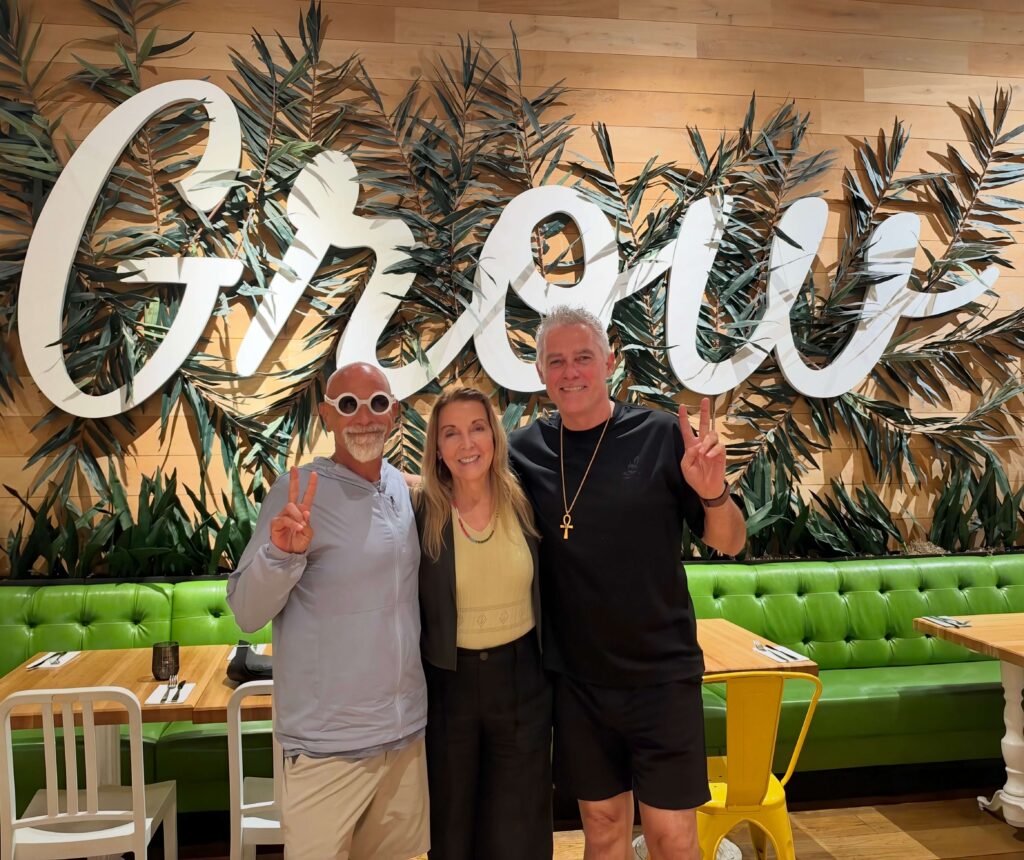
Zappy Zapolin, author Marcelene Dyer, and Dr. Tony Willcox in Boca Raton. Photo by Dr. Tony Willcox.
A Grounded Path Forward
Plant medicine integration with acupuncture offers a gentle, body-centered complement to the work people do after a journey. It does not replace medical or psychological care. Instead, it may help the nervous system settle, so new insights have room to take root.
For anyone exploring this path, working with licensed professionals at every stage is wise. The Johns Hopkins Center for Psychedelic and Consciousness Research shares current research on this growing field.
To learn whether acupuncture may support your integration, call Acupuncture Zen at 561-633-3537 to schedule a visit in Delray Beach.
